


Getting involved in a car accident in Las Vegas, whether on the bustling Strip or quieter side streets, can be both frightening and confusing. Immediate action is critical not only for your health and safety but also to protect your rights and interests. Having a clear plan empowers you to navigate the chaos that follows, making what comes next manageable. For more guidance, visit blakefriedmanlaw.com for legal support in the aftermath of an accident.
This step-by-step guide outlines exactly what to do after a collision, ensuring you follow the law, safeguard your health, and lay the groundwork for resolving issues with insurance or potential legal actions. Understanding each action can be the difference between a smooth recovery and ongoing headaches. Whether you’re a local, a visitor, or someone passing through, these steps are designed to help you respond confidently in a stressful moment.
Ensure Safety and Check for Injuries
Your priority after any car accident should be to assess your own condition and check the safety of all passengers and drivers involved. If you or anyone else is injured, immediately call 911 for emergency services. Even minor aches or dizziness should not be ignored, as adrenaline and shock can mask serious injuries. Remaining calm and methodical at this stage sets the tone for everything to follow.
Move to a Safe Location
Staying in the middle of the road—especially in a busy place like Las Vegas—puts you at greater risk of further accidents. If your car is drivable, carefully maneuver it to the side of the road or a safer area, and turn on your hazard lights to warn other drivers. If the accident occurs at a busy intersection, direct bystanders away from the danger while awaiting emergency help.
Contact Law Enforcement
Calling the police is essential, especially if there are injuries, significant property damage, or if the other driver flees the scene. In Las Vegas, use 911 for emergencies or 311 for less critical situations. The officer on scene will provide an impartial police report—an invaluable document for both insurance and potential legal claims. Always obtain the responding officer’s name, badge number, and a method for obtaining the report.
Exchange Information with Other Parties
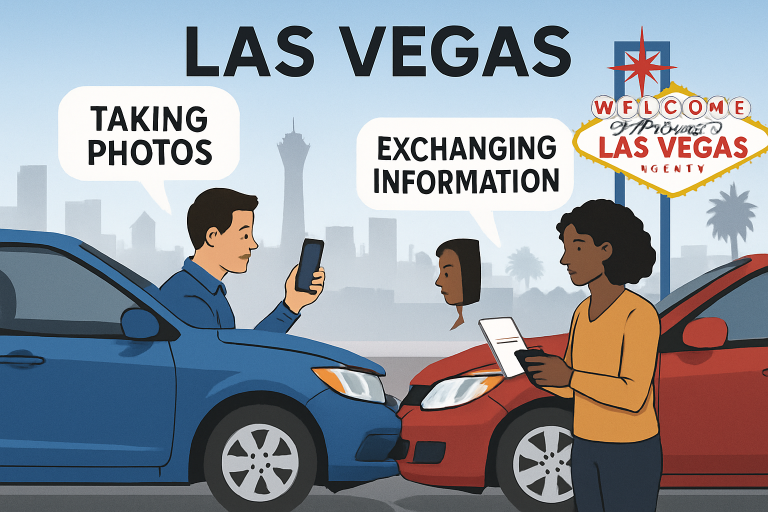
Politely ask all involved drivers for key information, including their names, phone numbers, driver’s licenses, license plate numbers, and insurance company details. If there are witnesses, also ask for their contact information. Do not admit fault or volunteer opinions about the cause of the accident, even if you feel pressured. Speak only to the facts, as statements can sometimes be misconstrued or used against your interests.
Reading up on best practices after a car crash, such as those outlined in the Consumer Reports guide on filing a car insurance claim, can help you be better prepared.
Document the Accident Scene
Use your smartphone to capture detailed photographs and videos of the entire scene. Focus on all vehicles (both up close and from a distance), including damages, road signs, and environmental factors such as traffic lights, weather conditions, or skid marks. If injuries are visible, document those as well—but always respect the privacy and dignity of those involved. These records will serve as robust evidence for your insurance company or legal representatives.
Seek Medical Attention
Get examined by a doctor even if you feel unharmed. Common car accident injuries, such as whiplash or concussions, often manifest hours or days after impact. A timely medical evaluation ensures your safety and provides the necessary documentation required for insurance claims or potential future legal action. Delaying treatment can put both your health and your potential compensation at risk.
Notify Your Insurance Company
Let your insurance provider know about the accident as soon as possible, providing an accurate and honest account of the events. Do not admit fault or speculate as to causes, and forward all collected documentation, including the police report and photographs. Your insurer will walk you through your policy’s requirements and guide your next steps for repairs and compensation. For additional tips, check the NerdWallet guide to filing a car insurance claim.
Consult a Legal Professional
Car accidents involving injuries, multiple parties, or disputes over fault often lead to complications best addressed by experienced legal counsel. An attorney will help you understand your rights, avoid costly mistakes with insurance adjusters, and build the strongest possible case if your accident leads to litigation or settlement negotiations. If the at-fault driver is uninsured or underinsured, this step becomes even more critical.
Following these essential steps after a car accident in Las Vegas helps safeguard your physical, financial, and legal well-being. Remaining calm, being thorough, and seeking expert guidance when needed ensures you’re in the best position for a positive outcome, no matter the circumstances.