

Electronic devices in almost every aspect of modern life use batteries. Mobile powerhouses are technology’s hidden heroes, from cell phones to electric automobiles’ intricate energy demands. As common rechargeable batteries, the 14500 and 18650 have varied features for different uses.
Choosing one right requires knowledge of how they power our electronics. This thorough description covers these batteries’ distinctive features. By going into detail, we hope to assist you in picking the proper 14500 or 18650 battery.
14500 VS 18650 Battery
1. Understanding the Basics
- 14500 Battery
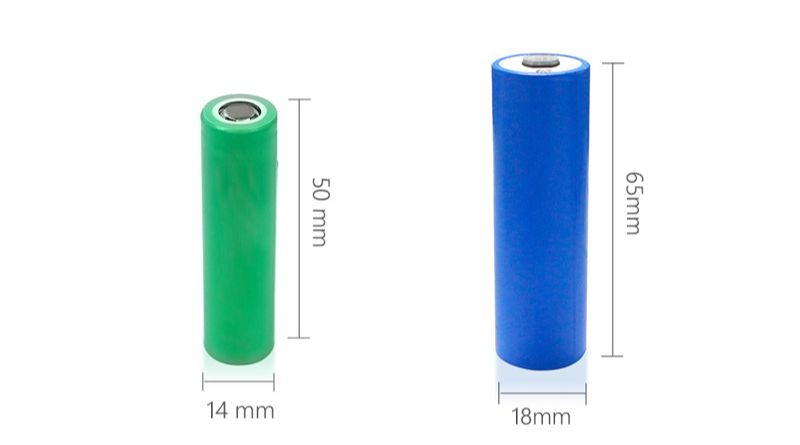
The 14500 battery is a rechargeable lithium-ion cell that measures 14mm in diameter and 50mm in length. It is essentially a rechargeable AA-sized battery and operates at a nominal voltage of 3.7 volts. Despite its compact size, the 14500 battery packs a decent amount of power, making it ideal for smaller devices like flashlights, portable fans, and some electronic gadgets.
- 18650 Battery
The 18650 battery, on the other hand, is larger, with a diameter of 18mm and a length of 65mm, hence the name 18650. It operates at a nominal voltage of 3.7 volts, similar to the 14500 battery. Due to its larger size, the 18650 battery can store significantly more energy, making it suitable for high-drain devices such as laptops, power tools, and electric vehicles.
2. Capacity and Energy Storage
One of the primary differences between the 14500 and 18650 batteries is their capacity, which directly affects the amount of energy they can store.
- 14500 Battery
Typically, a standard 14500 battery has a capacity ranging from 600mAh to 1200mAh (milliampere-hours). This capacity is sufficient for low-power devices and ensures a relatively longer usage time between charges.
- 18650 Battery
In contrast, an 18650 battery boasts a much higher capacity, often starting from 2000mAh and going up to 3500mAh or more. This increased capacity means that 18650 batteries can store more energy, making them ideal for devices that demand a continuous and substantial power supply.
3. Applications and Compatibility
- 14500 Battery
14500 batteries are commonly used in devices where space is limited, and power requirements are moderate. Flashlights, small electronic toys, and portable fans are some examples of devices that are compatible with 14500 batteries.
- 18650 Battery
18650 batteries are used in products that use a lot of power and need a steady and large source of power. 18650 batteries are used in laptops, digital cameras, power tools, and electric cars because of their high volume and energy output.
4. Charging and Voltage Considerations
- 14500 Battery
Both 14500 and 18650 cells have 3.7 volts as their standard power. When fully charged, the voltage can reach up to 4.2 volts. To safely charge lithium-ion batteries, you need a charger made for them. If you overcharge the battery or use a charger that isn’t made for it, it could get damaged or, in the worst case, leak or blow up.
- 18650 Battery
Like the 14500 battery, the 18650 battery needs a proper charger to keep it from being overcharged and to make sure it lasts longer. 18650 batteries usually take longer to charge than 14500 batteries because they can hold more power.
5. Size and Portability
- 14500 Battery
The compact size of the 14500 battery makes it highly portable and easy to carry. This makes it a preferred choice for devices that need to be lightweight and space-efficient.
- 18650 Battery
Even though the 18650 battery is bigger, it is still a good mix of size and power. Its round shape lets it fit well in most devices made for this size, so it fits snugly without making it too hard to carry around.
6. Cost Considerations
- 14500 Battery
14500 batteries are usually cheaper than 18650 batteries because they are smaller and hold less power. This makes them a good choice for cheap gadgets that don’t need a lot of power.
- 18650 Battery
18650 batteries are usually more expensive than other types because they can hold and use more energy. But because they last longer and can hold more energy, high-drain gadgets often have a better value in the long run, even though they cost more upfront.
Conclusion:
In conclusion, both 14500 and 18650 batteries have their own benefits and are made for different uses. The 14500 battery is a great choice if you need a small, light, and inexpensive power source for low-drain gadgets. On the other hand, the 18650 battery is the way to go if you need a high-capacity, high-power battery for things like computers, power tools, or electric cars.
Before making a choice, you should always think about how much power your device needs, how much money you have, and how much room you have. By knowing how these batteries are different, you can make an informed decision and make sure your devices work well and reliably.