


Lake Chatuge and the surrounding mountain communities of western North Carolina and northeast Georgia offer a compelling mix of water views, wooded acreage, cabins, and year-round homes. But a scenic setting can make it easy to overlook practical questions about roads, utilities, shoreline rights, and upkeep.
Buyers comparing property in Hayesville, Brasstown, Hiawassee, and nearby communities can benefit from local guidance from Lake Chatuge real estate agent Melissa Jenkins Stillwell. Melissa Stillwell’s website provides home-search tools, buyer and seller guidance, community information, and valuation resources for western North Carolina and northeast Georgia, with a focus on matching buyers with lakefront, mountain, and lifestyle-oriented properties.
Why Scenic Homes Require Extra Research
In a conventional neighborhood, the home itself may be the primary focus of review. Around Lake Chatuge and in the surrounding hills, the land and infrastructure can be just as important. A private road, a steep drive, a shared well, a septic system, a retaining wall, or a dock may all carry responsibilities that do not appear in the kitchen photos.
Buyers should investigate water exposure before they become emotionally attached to a property. The FEMA Flood Map Service Center can help buyers locate flood map information, but insurance professionals and local authorities should also be consulted, as coverage needs and property-specific risks can vary.
Start With the Lifestyle You Actually Want
First, define how the home will be used. A full-time residence has different demands than a weekend retreat, retirement home, or occasional rental. Ask whether the location works for grocery trips, healthcare visits, school routes, commuting, package delivery, and regular errands. Consider the seasons, too. A cabin that feels effortless on a sunny summer afternoon may require more planning during heavy rain, cold temperatures, or winter weather. Visit at different times of day when possible. Listen for road noise, check sunlight on the driveway, and confirm whether the internet and cell service support work, streaming, security systems, or emergency communication.
Check Access and Location
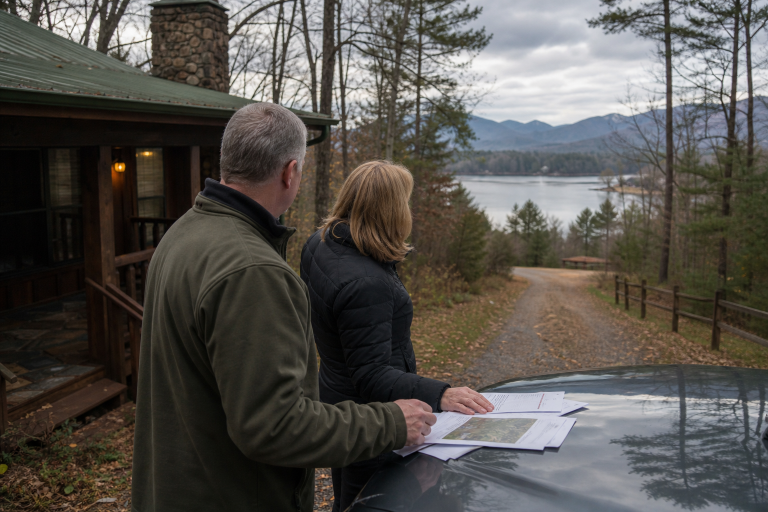
Roads and Driveways Matter
Confirm whether the route to the home is public, private, shared, or maintained through an owners’ association. If it is private, request the recorded maintenance agreement and understand who pays for grading, gravel, drainage repairs, tree removal, and snow or ice treatment.
- Drive the route in the same vehicle you expect to use regularly.
- Look for tight turns, steep grades, low branches, limited turnarounds, and washout-prone areas.
- Ask how emergency vehicles, moving trucks, propane suppliers, and repair crews reach the property.
- Check parking for residents, guests, trailers, and boats.
- Measure the travel time to services rather than relying solely on a map estimate.
Internet availability should be confirmed by address, not by a general statement that service exists nearby. The FCC’s National Broadband Map is a useful starting point, followed by direct confirmation with providers about installation, speeds, equipment, and service terms.
Review Waterfront Details Before Assuming You Have It
“Lake access” may mean a shared community launch, a deeded path, a nearby marina, or a lot that touches the water. “Waterfront” may still involve shoreline buffers, access limitations, public-land considerations, or restrictions on improvements. Read the survey, deed, plat, and any recorded easements before treating a view or path as a guaranteed right.
Questions to Ask About the Water
- Does the parcel directly reach the shoreline?
- Are dock rights included, shared, leased, or subject to approval?
- What structures already exist, and were they properly permitted?
- Are there restrictions on boats, lifts, shoreline work, swimming areas, or watercraft storage?
- Is the bank stable, rocky, steep, wooded, or showing signs of erosion?
- Has the property experienced water intrusion, runoff, or storm-related damage?
Inspect the Land and Structure
A standard home inspection is valuable, but unusual terrain or private systems may need specialized evaluations. For a mountain home, check drainage swales, culverts, retaining walls, foundations, decks, stairs, roofs, chimneys, and soil movement evidence. Water should flow away from the home without causing erosion or undermining the driveway. For lake-area property, inspect docks, seawalls, steps, boat lifts, crawl spaces, exterior siding, and moisture-prone areas. If the home has a well and septic, identify their locations, service history, capacity, and condition. Consider a septic professional, well contractor, structural engineer, or drainage expert if concerns arise.
Calculate the Full Cost of Ownership
The mortgage payment is only one part of the budget. Before making an offer, build a realistic monthly and annual estimate that includes:
- Property taxes, homeowners’ insurance, and any flood, wind, or specialty coverage.
- Association dues, road-maintenance fees, and shared-infrastructure assessments.
- Well, septic, propane, generator, and water-treatment maintenance.
- Tree work, landscaping, shoreline upkeep, dock repairs, and exterior maintenance.
- Snow removal, driveway work, pest control, and backup-power planning.
- Cleaning, monitoring, and property-management services for a second home.
Request insurance quotes early in the due diligence period. A house that appears affordable at the offer stage can become far more expensive if coverage is limited, deductibles are high, or private-road and shoreline costs are substantial.
Review Rules, Boundaries, and Documents
Read homeowners association rules, covenants, budgets, and meeting records when they apply. These documents can affect rentals, pets, parking, exterior changes, fencing, boat storage, docks, and detached buildings. Verify zoning and any restrictions before planning an addition, garage, guest space, workshop, or short-term rental.
Also review surveys, easements, shared-driveway agreements, utility agreements, permits, and boundary information. If language is unclear, ask a real estate attorney to explain the document before the contingency deadline passes.
Build a Smart Offer
A thoughtful offer reflects the property’s appeal and practical needs. Compare recent sales with similar water rights, views, acreage, road access, and condition. Protect inspections, financing, appraisal, insurance, and documents based on the transaction and local practices. Before closing, consider who maintains the road after storms, what happens if the well or septic fails, if boundaries and lake-access rights are documented, and if you can afford the home. Also, know what support exists if the property sits empty. A mountain or lake home near Lake Chatuge offers quiet, outdoor recreation, and a unique lifestyle. The best purchase depends on access, water rights, inspections, insurance, utilities, rules, and long-term costs, helping buyers make a practical, confident investment.