

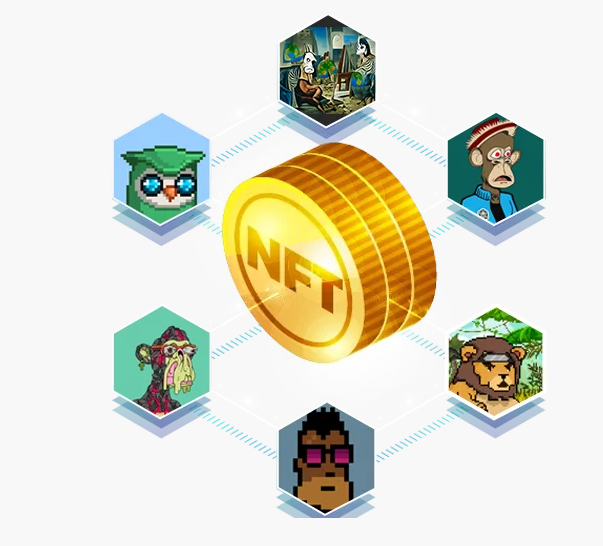
The way we used to trade is changing as a result of the digital age. Online payments are rising while the Best payment gateway made with traditional money are declining. Every store in 2022 will have a QR code that will allow customers to make payments without using cash. However, banks are a part of this type of transaction. What would happen if a user wanted to keep money in digital assets?
Similar in idea, NFT allows users to change their virtual cryptocurrency wallets in order to store or trade digital tokens. NFT platforms, where users can exchange these digital tokens, are expanding. Markets for NFT generate large returns for their owners.
Entrepreneurs frequently look for NFT marketplace guidelines to educate themselves about the hottest ideas before accelerating and incubating their concepts into the real world. Fortunately, this blog provides all the information customers require about the NFT Marketplace’s development, features, launch, and advantages. So let’s start with the fundamental ideas underlying the NFT Marketplace.
What is NFT?
Non Fungible Tokens, also known as NFTs, are electronic tokens based on blockchain technology that give users a marketplace to buy and sell assets in cryptocurrency. The tokens may take the form of collectible digital assets such as songs, works of art, pictures, videos, Metaverse, and other media. Each of them has a token address and a value in cryptocurrency that is established by the platforms and sellers. Since more and more people are using it, NFT will soon be a successful trade mechanism. Let’s examine the statistics that are changing in the NFT and crypto worlds.
By December 2022, there could be one billion crypto users worldwide, claims the website Crpyto.com.
From 128 million in July 2021 to 176 million in December 2021, BTC ownership has increased
By August 2021, NFT users have recorded 2,80,000 distinct buyers and sellers, with the most expensive NFT sold at $532 million
The aforementioned figures demonstrate the popularity of Crypto owners and the NFT market, demonstrating that the NFT marketplace will continue to grow in the future. Thus, developing this concept is a decisive action. But first, let’s learn more about the NFT industry.
NFT Marketplace: What is it?
A marketplace where they can be listed, sold, and bought is necessary for assets or items. Similar to that, NFT Marketplace is where NFTs are offered for sale by developers all over the world. To provide a trading platform to the hosting industry, buyers and sellers sign up. Popular NFT marketplaces include OpenSea and Rarible. Both markets are constructed on a blockchain network, with cryptocurrency serving as the primary medium of exchange.
The last two years have seen a rise in millennials’ use of the market. The bulk of those interested in NFTs (14%) are between the ages of 18 and 24, according to the text. Then comes the 25–34 age group, where 8% of respondents expressed interest in NFTs (Source: Colormatics). In 2022, the NFT market will already be worth $1 billion, enabling entrepreneurs to launch their ventures.
NFT marketplaces can be provided on mobile apps for a seamless and more convenient experience because Millennials frequently utilise them. The top 3 NFT apps are shown below for business owners to use while sketching prototypes with the NFT Marketplace App Development Company.
NFT Marketplace’s Best Apps
Many apps function as NFT marketplaces where users can purchase and trade digital assets.
- Sketchar: An artist app called Sketchar is accessible on iOS, Android, and the Galaxy Store. The software allows artists to develop their artwork and has a built-in NFT marketplace where they may sell it. The main flaw of Sketcher is that it doesn’t connect to other markets. It includes tutorials on drawing, from doodling to serious sketching. Developers of mobile apps take 5% of your first sale and 1% of each subsequent sale.
- PixelChain: Since it transforms pixel art into NFT, this programme has the enormous benefit of allowing users to buy and sell on a variety of channels. It is a browser-based app; a mobile app version is not available.
- NFT Go: Although the app offers a variety of marketplace channels, it is pricey to use. It is only available for download on iOS systems.
Initial Stage of NFT Marketplace Development
The key decision in developing an NFT marketplace is whether to build from scratch or use models from platforms that have evolved in the ways listed below:
- Development Decision: Deciding whether to go with white-label or from scratch development is a difficult choice for entrepreneurs. Market expansion for NFT
- Deciding on a blockchain network: Blockchain networks like Ethereum, Binance Smart Chain, Solana, Cardano, and Polygon are the most popular ones. Entrepreneurs must consult the NFT marketplace app development business before deciding which technology to use.
- Resources and Budget: Costlier in terms of resources, time, and money, development from scratch results in a distinct market with its own branding in the NFT marketplaces. The white-label market, however, is available to people who are new to NFT and cryptocurrency. It is a cost-effective solution that is ready-made in nature and completely configurable to meet needs.
Finally, business owners can educate themselves on a few of the below-mentioned tips for managing your project with an NFT Marketplace Development Company during the complex development phase.
Significant Phases of the Development Process
Entrepreneurs can learn more about the NFT marketplace process, which is presented during the development process, by following it.
- Selecting blockchain network: The blockchain network on which the marketplace will be created is being chosen. Examples of blockchain networks are Solana, Cardano, and Polygon.
- Making the UI/UX design: To attract more engaged users, the overall design must be user-friendly, appealing, understandable, and navigable.
- Robust Smart Contracts: Because processing contracts and transactions is a fundamental duty and the primary driver of operations in NFT markets, all market operations must pass via smart contracts programmes.
- Storage: DataBase is where the remainder of the user-based information is saved, while IPFS allows users to retrieve and store NFT details. Integration: Integration between the backend and frontend is crucial. From frontend to backend, the DBS administration installed on the server must function flawlessly.
- Beta testing: Testing the bugs is an essential step since during the testing phase, all platform problems are fixed.
- Deployment: The NFT marketplace, which may be web- or app-based, is the last step in the process. Once it is live, everyone in the globe can use it.
You now have a better understanding of how NFT, the NFT Marketplace, and app development work. What are the cutting-edge advantages of NFT Marketplace?
Benefits of the 2022 NFT Marketplace Launch
The NFT market is a futuristic strategy, and sooner or later, NFT will be practised globally in some capacity. It provides two significant advantages:
- Metaverse Enabled: To allow for seamless trading in the virtual world, virtual assets will be added to Metaverse and integrated with NFT. As a result, having a market concept enables entrepreneurs to embrace cutting-edge technologies.
- Millennialist: Businesses need to adapt to millennial trends because millennials are the new tech professionals. We’ve seen how millennials participate in NFT marketplaces, thus it’s time to develop this notion for widespread engagement with millennials.
Undoubtedly a hot topic, it holds promise for size and growth as more millennials use the platforms. Entrepreneurs developing the NFT marketplace concept may therefore need to seek particular features to provide in their marketplaces in order to improve user experience.
Focus on these features in your NFT marketplace
In order to ensure that users have a positive experience, an effective marketplace concentrates on a number of aspects. The following are some of the characteristics that business owners are required to adapt and incorporate in their NFT marketplace.
- Storefront: The store’s front page is one of the essential elements. Its appearance should be appealing and stylish in order to turn inactive users into active ones in the marketplace.
- Auction Feature: Assets on the market may be based on fixed, variable, or auction pricing. An effective auction feature implementation with no problems increases market exposure.
- Security: Markets are online, thus security mostly pertains to buyers and sellers. To stop online hacker attacks, NFT marketplaces must protect their markets from DDOS, CSRF, and SSR.
- Integration: The target audience expects seamless integration between various services. The NFT market should be flexible in comparison to other markets. Buyers may use the same wallet across several markets, while sellers could import a variety of collections from various sites.
- Wider Platforms: The market is platform-independent thanks to its widespread availability on several platforms. For users to enjoy their NFT marketplace on any device, a wide range of platforms can be used, including web, iOS, and Android with hybrid app development options.
- Clone Scripts: To begin their peer-to-peer NFT marketplaces immediately, new NFT marketplaces can employ clone scripts. One of its examples is the OpenSea clone script.
With the aforementioned qualities, business owners may give their audience a more pleasant experience. However, how does an NFT Marketplace appear to buyers and sellers? Let’s investigate.
What Does the Buyer End of NFT Marketplaces Look Like?
NFT Marketplaces are developed using a straightforward methodology that anyone can comprehend. With the purchasers’ process as follows, it is comparable to an online market.
- To register an account, users must either establish an account or log in using pre existing credentials.
- Users must configure their crypto wallet after logging in in order to store digital assets. Accounts from websites and exchanges are linked via wallet. Some wallets work with as many different chains as they can.
- Users must transfer money to their wallets before they can begin trading with the digital currency there.
- NFTs can be purchased from sellers at set pricing or at auction prices.
- While purchasing digital assets, one must pay for gas and market costs based on the forces of supply and demand in the trading sector.
How does the NFT Marketplace seem to sellers?
NFT marketplaces provide sellers different features than they do buyers.
- Since sellers can import current collections from many platforms, their trade is more flexible.
- The marketplace for sellers is more akin to a central location for gathering, managing, planning, and creating NFTs for exchange and trade.
- Important information like NFT price, vital metrics, token allocation (indicating buyer’s ownership and authenticity), and NFT category are filled in by sellers (image, gif, or video).
- The payment methods that the sellers accept are mentioned along with the sale listings.
- Sellers have three options on the marketplace: time auction (runs for a certain period of time), unlimited auction (seller may stop auction at any time), and set price selling.
Also Read: NFTs in Video Games: Do They Have a Future?
The Last Wise Words
That is how the finished item appears to the buyer and seller. Before approaching any NFT Marketplace app development companies, business owners can obtain all the necessary information about the NFT Marketplace from the blog.