
A kitchen is not only a place for cooking family meals. It can be a place for small talk with snacks in leisure time, dinner at family reunions, and parties with friends. That’s why many people are concerned about how to design a kitchen. This blog walks you through six common kitchen layouts and offers a step-by-step guide to develop your design ideas.
6 Common Types of Kitchen Layouts
Before getting to design your dedicated kitchen, the first thing you need to decide is the layout of the space. Here, we’ve compiled a list of six common types of kitchen layouts and will walk you through their characteristics.
- One-Wall Kitchen: This type of kitchen layout arranges all appliances, storage space, and countertops along one wall, creating a clean appearance. A One-wall layout is best for small kitchens in lofts and studio apartments, with an advantage to maximize your space.

- Galley Kitchen: Galley Kitchen is another popular layout type for small kitchens, especially where two walls face each other. Designers will arrange the work areas against both walls, maximizing the use of the space.

- L-shaped kitchen: L-shaped kitchens are perfect for corner spaces and open-concept designs. The working areas are arranged along two perpendicular walls, creating a working triangle, making it more convenient for you to reach whatever you want.

- U-shaped kitchen: Featuring three connected walls of cabinets and counters, a U-shaped kitchen is an ideal option for open-plan designs in a large kitchen. It offers ample storage and allows you to specify more layers of functions in your kitchen.

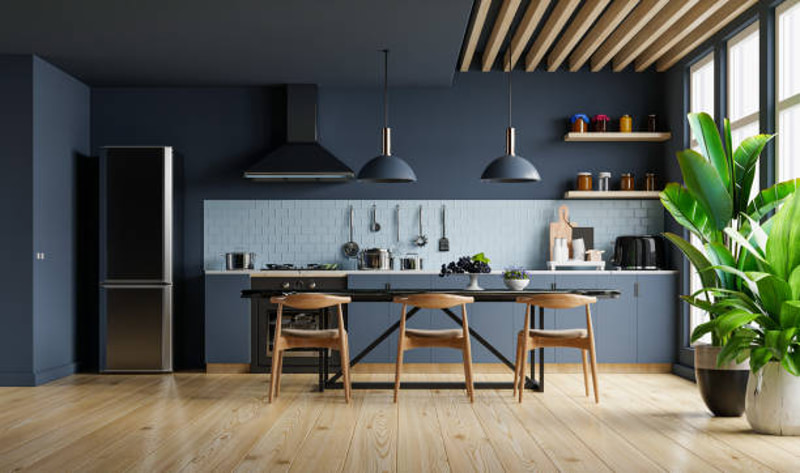
- Island kitchen: In an island kitchen layout, a floating counter incorporates the functions of a dining room. It allows you to cook, dine, and socialize in one space. It’s perfect for large open-plan designs and is widely used in luxurious kitchen designs.

- Peninsula kitchen: In peninsula layouts, an extra worktop is attached to the end of an L-shaped working area, creating a flexible space for preparing cooking ingredients, stacking dishes, or having a quick meal. It adds more functions to your kitchen, despite the size.

How to Design a Kitchen in 6 Steps?
After deciding on the layout of your kitchen, enrich it with details like materials, decorations, and furniture. If you are a beginner who doesn’t know how to design a kitchen from scratch, refer to our step-by-step guide to kick off your home renovation project.
Step 1. Inspire Your Design Ideas
Before getting to the actual design process, view as many design examples as possible to get ideas of what style you prefer. Websites of professional design companies and interior design magazines offer numerous kitchen design examples for you to refer to. You can also visit your friends’ and neighbors’ houses to get more tangible inspiration.
When browsing kitchen design examples, it’s crucial to analyze what elements attract you the most in your favorite design examples, and how different design elements are incorporated into a space. You can apply the same elements later in your own project.
Step 2. Consider the Must-Haves
To make sure your kitchen satisfies your expectations, plan carefully for the necessary storage space, appliances, decorations, and other items. Identify the locations, dimensions, and the numbers of these must-haves according to the size and layout of the kitchen plan.
Step 3. Design the Layout and Details
Now, it’s time to create a detailed design plan. Use 2D CAD software like ZWCAD to create a floor plan. Programs like ZWCAD are developed for a variety of user scenarios, and even beginners can use them to elaborate design presentations in common formats without effort.

After completing the floor plan, you can add the locations and dimensions of the must-have elements. Then, generate a 3D model to showcase the elevation designs like cabinets and windows.
Step 4. Choose Durable Materials
In the last step, you’ve set up the framework of your kitchen. Now, you can enrich it with details of materials. The difficulty here is to balance aesthetic pursuits, practical concerns, and costs. Choose high-quality appliances and durable materials that fit the preferred design style in Step 1.
Step 5. Use Timeless Design Color
A harmonious color scheme sets the mood of your kitchen design and is the key to a more appealing kitchen. You can never go wrong with timeless design color matches like olive green plus champagne, light brown plus mint green, dark blue plus light blue, etc.
Step 6. Render the Kitchen Design
The final step is to render the design presentation and simulate what your kitchen looks like in different types of lighting. The rendering feature is offered by most kitchen design software.
Conclusion
Even if you have little knowledge about how to design a kitchen, you can kick off your renovation project with the right methods and user-friendly tools. The very first step is to find a suitable design style and layout for your kitchen, for which extensive research can be required. You will also need to plan on the must-have features of your kitchen according to the expected functions and the size. Then, you can start to create 2D and 3D visualizations with professional design software!