

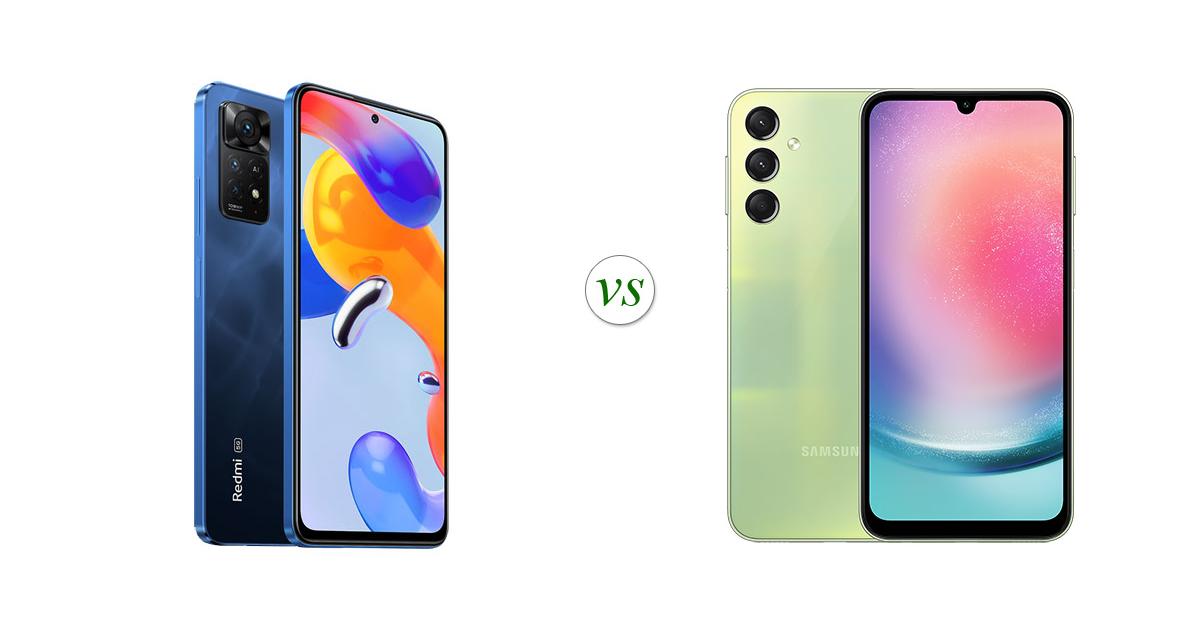
Both brands are reputable for economical, competent smartphones. We’ll compare the Samsung Galaxy A24 and Redmi Xiaomi’s prices, including design, display, performance, camera, battery life, and software.
Price Comparison:
Let’s compare Samsung Galaxy A24 with Redmi Xiaomi prices.
Galaxy A24 is a budget-friendly smartphone with reasonable pricing. Although prices vary by region and storage option, it generally offers good value. Samsung devices with Super AMOLED displays and decent cameras cost a fair sum.
However, Redmi Xiaomi devices have cheaper pricing. Xiaomi makes affordable, feature-packed devices. This makes Redmi Xiaomi smartphones appealing to budget-conscious shoppers since they offer great value.
Both the Samsung Galaxy A24 and Redmi Xiaomi are great value for their prices. Personal preferences like style, display technology, camera features, and software experience determine the choice. Your region’s models and variants may also influence your choice. Samsung and Redmi Xiaomi are known for manufacturing high-quality affordable smartphones, so analyze your needs and priorities before buying.
Design:
The Samsung Galaxy A24 and Redmi Xiaomi have varied designs to suit different tastes.
Round corners and a plastic back panel give the Samsung Galaxy A24 a sleek, modern look. Users can choose a hue that suits their preferences. The back panel looks clean and attractive with the rear camera module incorporated. Ergonomic design makes the item easy to use.
However, the Redmi Xiaomi smartphone has a Redmi design. It has a shiny back and plastic structure. The Redmi Xiaomi gadget comes in several colors and has a sturdy design. Camera modules are usually housed in square or rectangular housings, depending on the model.
Personal preference determines which smartphone design appeals to an individual. Samsung Galaxy A24 customers may enjoy its elegant style, whereas Redmi Xiaomi consumers may prefer its durability.
Display:
The Samsung Galaxy A24 and Redmi Xiaomi have immersive displays, but there are distinctions.
The Galaxy A24 has a 6.5-inch Super AMOLED display. This display technology is perfect for multimedia due to its brilliant colors, deep blacks, and excellent contrast. Sharp graphics are achieved with Full HD+ resolution. The device’s high refresh rate may improve user interface smoothness.
Depending on model and variation, the Redmi Xiaomi smartphone may have an IPS LCD or AMOLED display. Xiaomi’s Redmi series has good displays with realistic colors and decent brightness. Some devices have Full HD+ resolution, but most do.
A Super AMOLED display gives the Samsung Galaxy A24 better color reproduction and contrast. In AMOLED models, the Redmi Xiaomi still delivers a good visual experience.
Performance:
Many smartphone users value performance, which can greatly affect their experience. Compare the Samsung Galaxy A24 and Redmi Xiaomi’s performance.
The Samsung Galaxy A24 may use a Qualcomm Snapdragon chipset or a mid-range Exynos processor. Daily work and light gaming are easy with these processors. RAM and storage options vary by model, although most should allow multitasking.
However, Redmi Xiaomi devices prioritize performance. They generally use Qualcomm’s Snapdragon CPUs, which are powerful and efficient. Xiaomi offers customizable RAM and storage configurations. This supports resource-intensive programs and games and speeds up performance.
Due to its CPU and RAM options, Redmi Xiaomi phones operate better. However, the Samsung Galaxy A24 should perform well for most people, especially for daily work and casual gaming.
Camera:
Another important factor when comparing smartphones is camera setup, which affects photo and video quality.
Multipurpose cameras are typical of the Samsung Galaxy A24. A depth sensor, primary wide-angle, ultra-wide-angle, and macro lenses may be included. Samsung camera software generally has AI scene detection and multiple shooting settings. The image processing prioritizes natural colors and appropriate exposure.
In contrast, Redmi Xiaomi smartphones have camera systems for photographers. They usually have a high-resolution primary sensor, ultra-wide-angle lens, and macro or depth sensor. Pro modes, AI upgrades, and creative modes are common in Xiaomi’s camera software. Image editing may boost contrast and color vibrancy.
Both smartphones take good images and videos, however customers may prefer different color rendering and camera functions. Some may favor the Redmi Xiaomi’s more extensive feature set, while others may prefer the Samsung Galaxy A24’s natural and balanced approach.
Battery Life:
Many users consider battery life because it impacts how long a smartphone can survive on a charge.
The Samsung Galaxy A24 may have a 4,000–5,000 mAh battery. Battery life depends on processor efficiency and software power optimization. Users can get a whole day on a charge with moderate use.
Redmi Xiaomi phones have great batteries. They have 4,000–6,000 mAh or more batteries, depending on the model. Redmi Xiaomi devices may last a day or longer with daily use thanks to efficient processors and Xiaomi’s power optimization.
For battery life, the Redmi Xiaomi series has the edge thanks to its larger batteries and effective power management.
Software:
Smartphone software can greatly affect daily use and satisfaction.
The Galaxy A24 runs Samsung’s One UI, a feature-packed and user-friendly Android skin. One UI lets you customize themes, icons, and gesture controls. Samsung updates software often, including security fixes and significant Android OS updates.
Redmi Xiaomi phones use MIUI, Xiaomi’s Android overlay. MIUI offers several theme, app icon, and system animation customizations. Xiaomi releases regular software upgrades, but the timing varies by model and location.
MIUI and Samsung’s One UI have unique features and customization choices. Choice generally comes down to personal preference.